

Creating a capsule product involves much more than placing powder inside two matching shells. The capsule must hold the intended quantity, remain stable during storage, suit the filling process, and meet the dietary or commercial expectations of the eventual user. Capsuline makes these decisions easier through a broad range of pharmaceutical-grade empty capsules for personal projects, compounding pharmacies, emerging supplement brands, and established nutraceutical manufacturers. Customers can explore bovine-gelatin capsules, plant-derived HPMC shells, clear and coloured varieties, delayed-release formats, titanium-dioxide-free options, pet capsules, and custom solutions. Supported by multiple sizes, flexible quantities, filling accessories, and technical assistance, the company gives both small and large buyers room to build a more considered capsule product.
Gelatin Capsules Provide a Familiar Foundation
Capsuline’s gelatin capsules are manufactured using pharmaceutical-grade bovine-hide gelatin. They are produced in cGMP-certified facilities in North and South America, making them a traditional option for suitable supplement, pharmacy, and formulation applications.
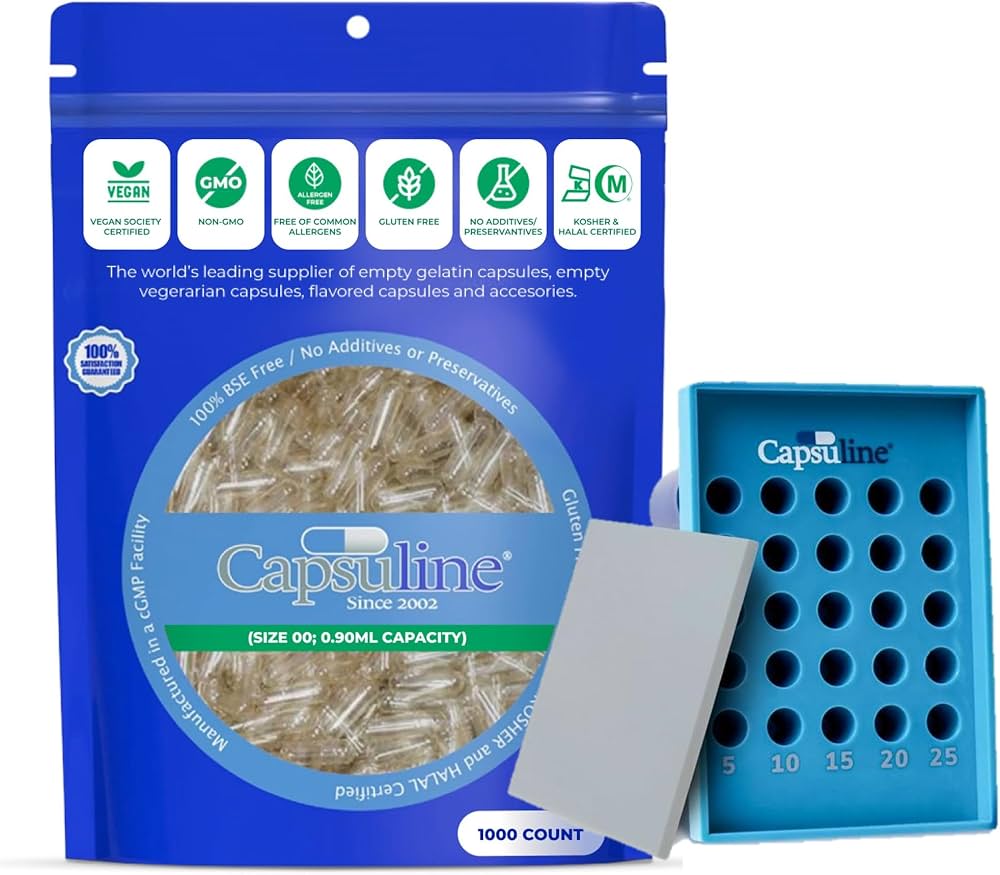
Clear gelatin capsules reveal the contents inside, which can work well for naturally colourful powders or products where visual transparency is part of the presentation. Light-sensitive contents may require a more protective capsule and suitable outer packaging.
Because gelatin is animal-derived, companies should describe it accurately and consider the dietary, cultural, and religious requirements of their market. Relevant certifications must be confirmed for the specific product selected.
Vegetarian K-CAPS Support Plant-Based Product Plans
K-CAPS are Capsuline’s HPMC vegetarian capsules. Their main ingredients are plant-derived hydroxypropyl methylcellulose and purified water, offering an alternative to traditional animal-based gelatin.
The HPMC material is derived from wood-pulp sources that include softwood species such as pine and spruce. These capsules can therefore suit vegan and vegetarian product positioning when all other ingredients and production processes also meet the required standards.
Clear K-CAPS allow the fill material to remain visible, while coloured options give a finished product a stronger identity. Colour can make a supplement line easier to organise, but its appearance should remain consistent across production batches.
Vegetarian capsules are available in numerous sizes, enabling businesses to balance the required capacity against comfort and product presentation. A large capsule may hold more powder, but dividing a serving between smaller capsules can sometimes create a better user experience.
Capsule selection should always include compatibility and stability testing. Temperature, humidity, formulation type, packaging, and storage duration can affect performance, regardless of whether the shell is made from gelatin or HPMC.
Capsule Products for Different Requirements
Capsuline provides several capsule formats for personal and commercial applications:
- Clear gelatin capsules: Bovine-gelatin shells that make suitable, non-light-sensitive contents visible.
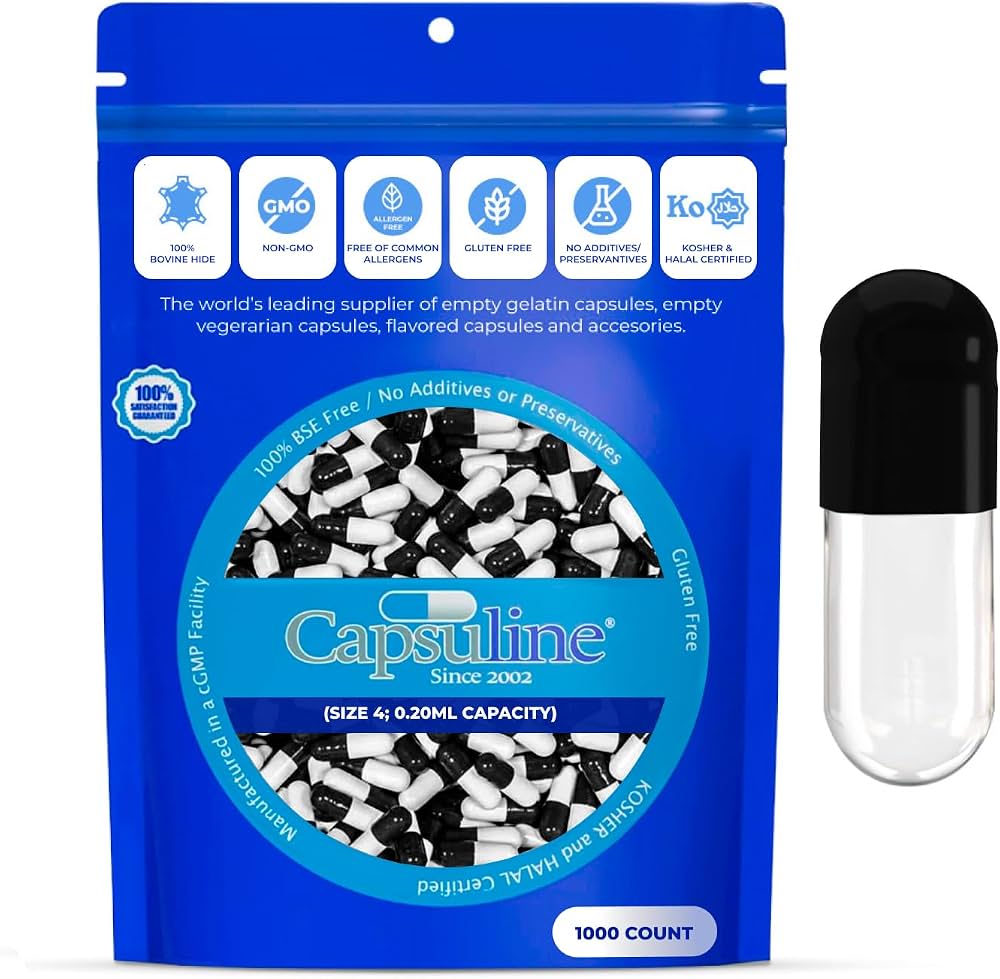
- Coloured gelatin capsules: Useful for visual separation, product identification, and distinctive presentation.
- Flavoured capsules: Designed to make the experience more pleasant where taste or aroma is a concern.
- K-CAPS vegetarian capsules: HPMC shells created with plant-derived material and purified water.
- Delayed-release capsules: Developed to delay the release of compatible contents compared with standard shells.
- Acid-resistant capsules: Intended for formulations requiring resistance to the stomach environment for a specified period.
- TiO2-free capsules: Available in selected gelatin and HPMC formats for titanium-dioxide-free requirements.
- Pullulan capsules: A plant-based option for customers considering an alternative capsule material.
- Naturally coloured capsules: Designed for brands pursuing particular ingredient and clean-label preferences.
- PetCaps: Capsules created for selected companion-animal applications.
- Separated capsules: Supplied with the cap and body already separated for compatible filling processes.
- Custom capsules: Commercial services that may include special colours, printing, and branded specifications.
Each category serves a different purpose. Buyers should review the precise material, documentation, certification, and intended use rather than choosing solely through colour or price.
Flexible Quantities Make Development More Manageable
Capsuline serves customers at different production stages. Small-quantity bags begin with manageable amounts for personal users, pharmacies, product developers, and start-ups testing an early formulation.
Larger bag quantities allow a growing business to increase production without immediately committing to tens of thousands of shells. This approach can reduce excess stock while packaging, flavour, dosage, and customer demand are still being evaluated.
Bulk boxes generally contain at least 50,000 capsules, with higher quantities available for commercial production. Wholesale support and special pricing may be available for qualifying larger orders.
Accessories Improve Accuracy and Organisation
Capsuline carries practical accessories for preparation, testing, counting, and storage. These include mortar-and-pestle sets, pill-counting trays, capsule organisers, tamping tools, and length gauges.
A mortar and pestle can support the preparation of compatible materials, while a pill-counting tray makes it easier to handle completed capsules in an orderly manner. Clean equipment and controlled working practices remain essential.
Tamping tools help compact powder into the capsule body, potentially increasing the amount that fits inside. The Tamping Simulator can assist users in understanding how compression may affect anticipated capacity.
Reliable Supply Matters at Commercial Scale
Capsuline promotes a vertically integrated supply-chain model intended to support traceability, dependable availability, and consistent quality. These qualities become increasingly important when a product moves from small trials into regular manufacturing.
A business that develops its packaging around a particular capsule size and colour needs confidence that the same specification can be sourced again. Unexpected changes can interrupt production or force expensive design adjustments.
Technical support gives customers somewhere to direct questions involving capsule selection, sizing, or troubleshooting. Speaking with a capsule specialist can be especially useful before placing a large or customised order. Worldwide shipping also helps the company serve international businesses, although customers should review destination-specific costs, import requirements, delivery times, and current ordering terms.
Proper stock management remains the buyer’s responsibility. Capsules should be stored according to the supplied instructions and protected from unsuitable heat, moisture, contamination, and physical damage.
Put Better Thinking into Every Capsule
Capsuline gives formulation projects a more professional starting point through gelatin, HPMC, delayed-release, acid-resistant, TiO2-free, pullulan, naturally coloured, pet, and custom capsules. Its flexible quantities welcome both careful experimentation and established commercial production, while size guides and filling accessories support more organised preparation. The smartest purchase begins with the real formula: understand its density, intended serving, target user, storage conditions, and regulatory requirements before selecting the shell. Choose carefully, test consistently, and let the right Capsuline capsule carry every formulation with clarity, convenience, and purpose.