

Most dog owners put more thought into food than they probably get credit for. You check the ingredients, compare a few bags, consider your dog’s age and maybe even spend far too long wondering whether chicken or fish is the better choice.
But there is a bigger question that often gets overlooked: is the food actually right for your dog?
Two dogs can be the same breed and roughly the same size yet have completely different nutritional needs. One might spend hours running outdoors, while the other considers moving from the sofa to the kitchen a fairly productive afternoon. Feeding them exactly the same way does not always make sense.
That is the idea behind Japhy, a French pet food brand that takes a more personalized approach to what goes into your dog’s bowl.
The label only tells part of the story
Reading the ingredients on a bag of dog food is useful, but good nutrition is not simply about finding a product with an impressive ingredient list.
Age matters. Weight matters. Activity levels matter. Sterilization can affect nutritional requirements, and a growing puppy obviously has different needs from an older dog who spends much of the day relaxing.
Portion size deserves attention too. Even high-quality dog food can become a problem when the daily serving does not match the animal’s actual energy requirements.
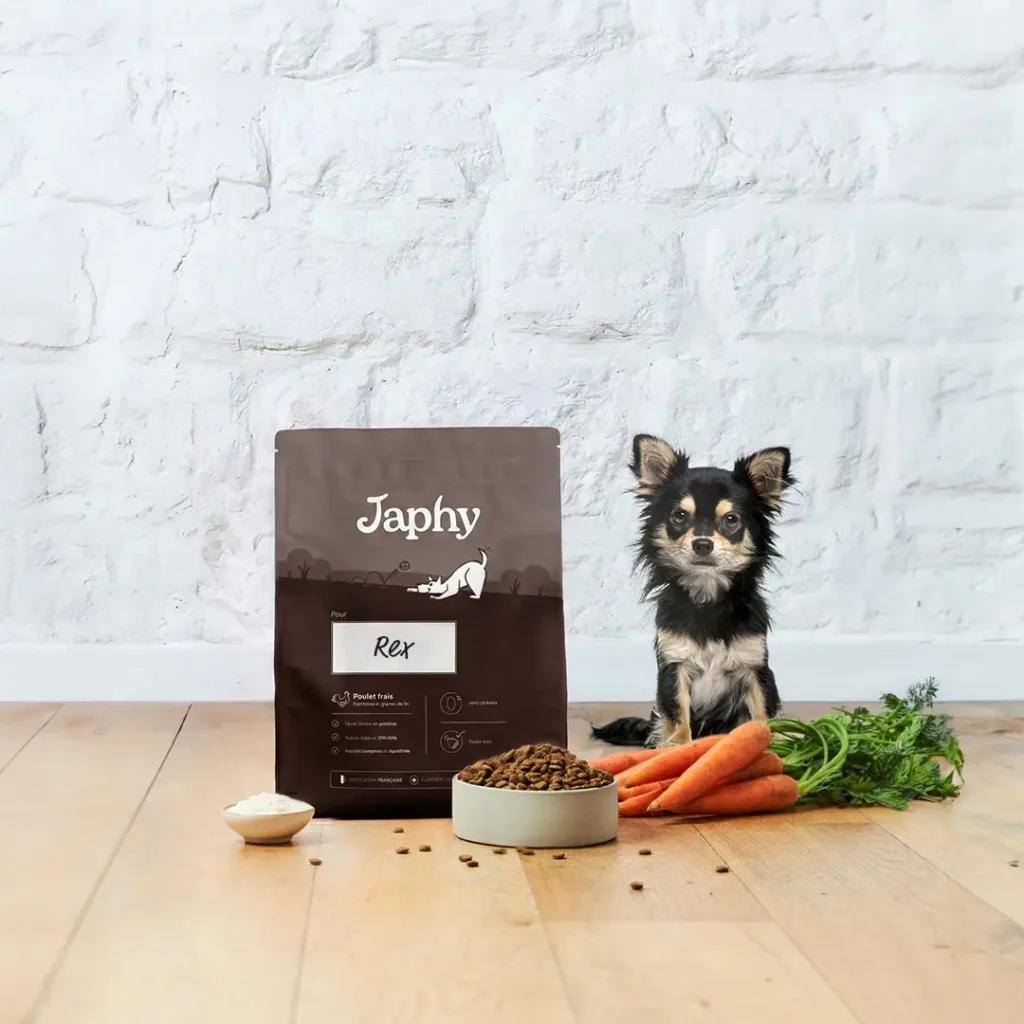
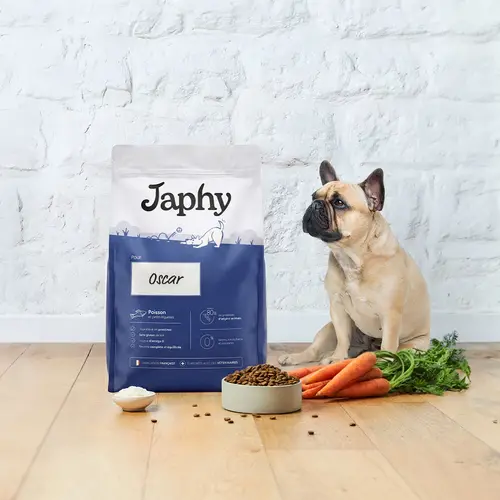
This is where Japhy does things differently. Rather than asking owners to choose a generic bag and work everything else out themselves, the service starts by building a profile of the dog. Factors such as breed, age, weight, body condition and physical activity are used to recommend an appropriate recipe and calculate a daily portion.
It sounds like a small change, but it shifts the question from “Which dog food should I buy?” to “What does my dog actually need?”
Your dog’s needs are not fixed forever
One of the problems with finding a food your dog likes is that it is tempting to stick with it indefinitely.
Your dog, however, does not stay the same.
A puppy grows rapidly. An adult dog may become more or less active. Sterilization can change energy requirements. Senior dogs may need their diet adjusted again as their lifestyle and body change.
Japhy accounts for these changes by allowing the recipe and quantities to evolve with the animal’s profile. That makes personalized nutrition more useful than simply putting a dog’s name on a bag.
There is still an important role for the owner here. Pay attention to your dog rather than assuming any feeding plan is perfect forever. Changes in body condition, appetite, digestion, coat quality and energy can all provide useful clues about how well a diet is working.
What should you actually look for in dog food?
There is no single recipe that automatically suits every dog, but a few practical questions can make choosing food much easier:
- Does the food provide appropriate nutrition for your dog’s age and life stage?
- Are the daily portions suited to their weight and activity?
- Does your dog digest the food comfortably?
- Is their weight remaining healthy and relatively stable?
- Can the feeding plan be adjusted when their needs change?
This is also why personalized dog food has become an interesting alternative to choosing solely by breed or flavour.
Japhy, for example, offers multiple recipes rather than treating every dog as though their nutritional requirements are identical. Its kibble is made in France, with recipes developed alongside nutrition professionals and adapted according to the individual profile.
Personalization can also make feeding simpler
There is another side to all of this that has little to do with nutrition labels: convenience.
Buying dog food sounds simple until you forget to restock, suddenly notice half a scoop left in the bag, or realize that the giant bag you bought months ago no longer suits your dog’s current needs.
With Japhy, deliveries can follow the dog’s expected consumption, while owners can adjust their delivery preferences when necessary. That takes some of the guesswork out of both portion planning and restocking.
Of course, personalized food does not mean you can stop paying attention to your dog. Quite the opposite. The most useful feeding plan is one that combines good nutrition with what you observe every day.
If your dog is maintaining a healthy weight, has normal digestion, enjoys their meals and has energy appropriate for their age and lifestyle, those are encouraging signs. If something noticeably changes, the feeding plan may need another look, and persistent health concerns are always worth discussing with a veterinarian.
Choosing dog food does not have to become a science project. But it is worth moving beyond the idea that every dog needs roughly the same thing from a different-sized bag. A more personal approach starts with a simple observation: the dog standing beside your food cupboard is an individual, so their bowl should reflect that.