
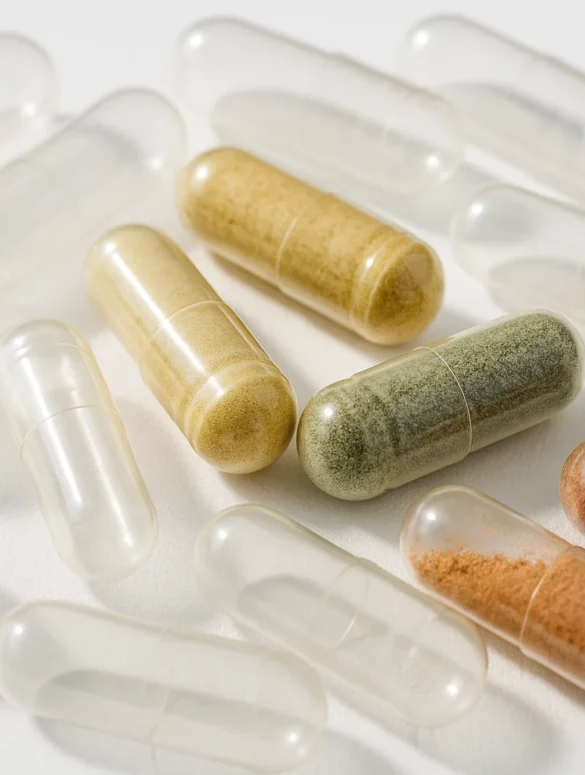
An empty capsule may look simple, but choosing the right one requires more thought than its modest size suggests. Material, capacity, colour, release behaviour, dietary suitability, filling method, and order quantity can all affect the finished product. Capsuline specialises in two-piece pharmaceutical-grade empty capsules for individuals, compounding pharmacies, start-ups, nutraceutical companies, and high-volume manufacturers. Its range covers traditional bovine gelatin capsules, plant-derived HPMC alternatives, delayed-release designs, acid-resistant options, titanium-dioxide-free varieties, natural colours, pet capsules, and custom solutions. With sizes extending from large 000 capsules to compact size 4 and 5 options in selected ranges, Capsuline helps buyers find a shell that suits both the intended formulation and the people expected to swallow it.
Gelatin Capsules Keep the Traditional Option Versatile
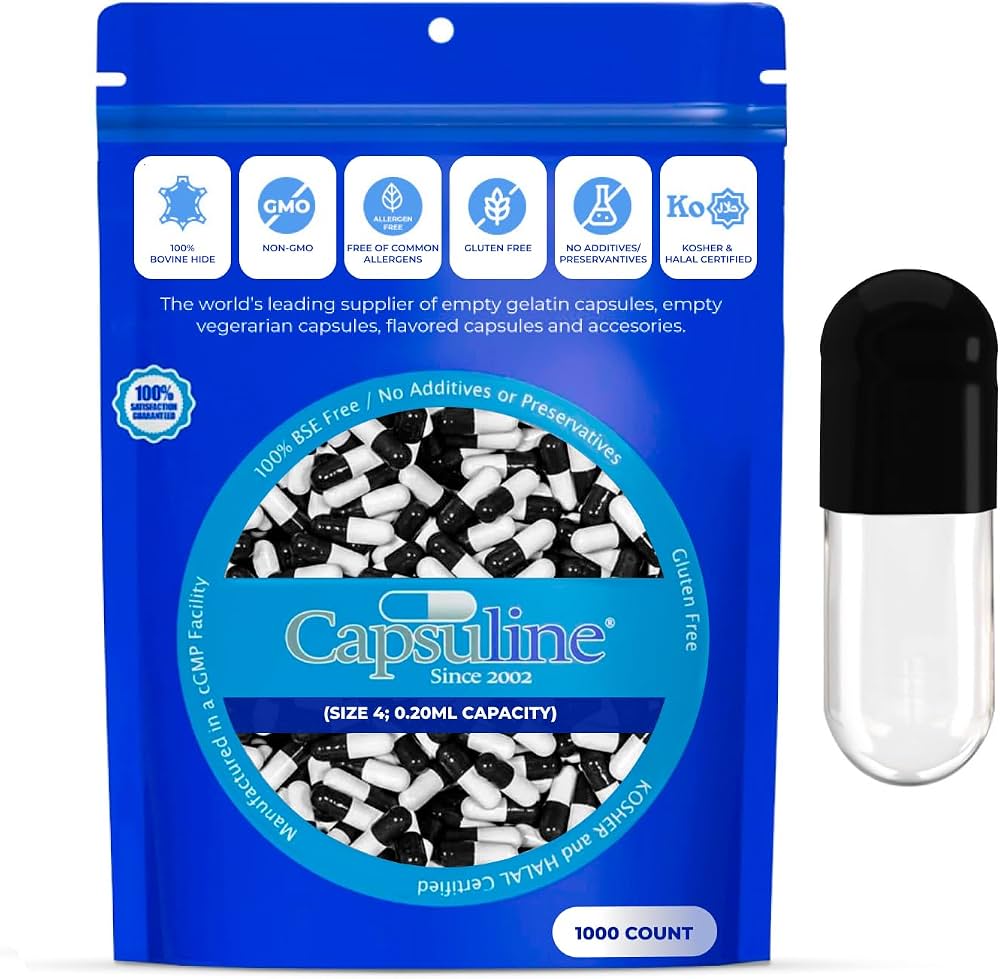
Capsuline’s gelatin capsules are manufactured from bovine-hide gelatin in cGMP-certified facilities in North and South America. They provide a familiar two-piece format for holding suitable powders and other compatible formulations.
Customers can choose clear capsules when the contents should remain visible or coloured versions when appearance, organisation, or light protection is more important. Flavoured varieties add another option for users who dislike the ordinary taste of an unflavoured shell.
The gelatin collection is offered across an extensive range of sizes, including 000, 00E, 00, 0E, 0, 1, 2, 3, and 4. Some smaller-quantity departments also include size 5 capsules.
Gelatin remains an animal-derived material, so it will not suit vegan or vegetarian requirements. Buyers should confirm certifications, ingredients, and intended-market expectations before deciding that the traditional option is automatically the correct one.
K-CAPS Offer a Plant-Derived Alternative
Capsuline’s K-CAPS vegetarian capsules are made with hydroxypropyl methylcellulose, commonly shortened to HPMC, and purified water. The HPMC is derived from plant material such as pine and spruce wood pulp.
These capsules can support brands building vegetarian or vegan-friendly product ranges. They may also appeal to customers who prefer a plant-derived shell for personal, cultural, or dietary reasons.
Clear and coloured options allow the capsule’s appearance to complement the formulation. A transparent shell can display an attractive powder, while an opaque or coloured capsule can create a stronger visual identity.
HPMC capsules are available in multiple sizes, enabling users to balance fill capacity with swallowability. The largest capsule is not necessarily the most efficient if customers approach it as though they have been asked to swallow a small piece of furniture.
Material compatibility should always be evaluated for the specific contents and storage conditions. Humidity, temperature, formulation characteristics, and packaging can influence how any empty capsule performs over time.
Capsule Choices Available Through Capsuline
The store brings together products for several production scales and formulation needs:
- Clear gelatin capsules: Traditional bovine-gelatin shells that allow suitable contents to remain visible.
- Coloured gelatin capsules: Available for stronger identification, branding, or visual separation between formulations.
- K-CAPS vegetarian capsules: HPMC shells produced from plant-derived material and purified water.
- Delayed-release capsules: Designed for formulations requiring a different release point from standard capsules.
- Acid-resistant capsules: Created to withstand stomach conditions for an intended period when properly formulated.
- TiO2-free capsules: Gelatin and vegetarian options supporting titanium-dioxide-free product requirements.
- Naturally coloured capsules: Plant-based shells using selected natural colouring approaches.
- Pullulan capsules: Another vegetarian capsule material for buyers considering alternatives to standard HPMC.
- PetCaps: Specialty capsules intended to make selected formulations more manageable for companion animals.
- Custom capsules: Services involving colours, printing, or other specifications for qualifying commercial projects.
Availability varies by material, size, colour, and quantity. Customers should check current technical documentation before developing a formula or designing packaging around a particular capsule.

Sizes Turn Formulation into a Practical Decision
Capsule size determines how much material can fit inside, but capacity depends heavily on the density and flow of the formulation. The same capsule may hold very different weights of two different powders.
Size 000 provides one of the largest standard capacities, followed by 00 and 0. Sizes 1 through 5 become progressively smaller, although the precise availability depends on the chosen capsule material and order format.
Extended sizes such as 00E and 0E offer alternative proportions. These options can be useful when a formulation requires additional volume, but the complete dimensions should be compared with filling equipment and packaging.
Capsuline provides a size chart and capsule-length gauge to assist with selection. Testing samples with the actual formula is more reliable than designing a product around a theoretical capacity alone.
Tamping changes how much powder can be placed into a shell. However, excessive compression, inconsistent filling, or unsuitable powder flow can create weight variations and closure problems, making controlled testing essential.
Quantities Work for Start-Ups and Established Producers
Capsuline separates its offering into smaller and bulk quantities. Bags beginning at approximately 100 capsules can suit individual projects, pharmacies, development work, and small companies that are not ready to invite 100,000 capsules into the stockroom.
Larger bags extend into thousands of units, allowing growing businesses to increase production without immediately committing to a full commercial box. This flexibility can be valuable during trials or early product launches.
Bulk boxes generally begin around 50,000 capsules, with quantities reaching beyond 200,000 units for selected products. Commercial buyers can also contact the company regarding wholesale arrangements and special pricing on larger orders.
Accessories Bring Greater Order to the Filling Process
Capsuline complements its empty shells with accessories for capsule preparation and handling. Its selection includes tamping tools, mortar-and-pestle sets, pill-counting trays, organisers, and capsule-length gauges.
A mortar and pestle can help prepare suitable ingredients, while a counting tray makes it easier to manage completed capsules cleanly and accurately. A length gauge assists with checking whether shells have been closed consistently.
The Tamping Simulator helps users estimate how powder compression may affect capsule capacity. It can provide useful development insight before a filling process is expanded to larger volumes.
Accessories cannot replace proper production controls. Businesses manufacturing products for sale must follow applicable requirements for sanitation, ingredient verification, batch records, testing, labelling, and quality assurance.
Give Every Formula the Shell It Deserves
Capsuline demonstrates that the outer shell is an important part of a finished capsule product, not merely packaging that happens to be swallowed. Its gelatin, HPMC, delayed-release, acid-resistant, TiO2-free, naturally coloured, pullulan, pet, and custom options allow buyers to match the capsule more carefully to the formulation and intended audience. Start with the material, confirm the correct size, test the actual contents, and choose an order quantity that suits genuine production needs. With thoughtful selection and appropriate quality controls, Capsuline can help turn a loose powder and a promising idea into a cleaner, more convenient, and professionally presented capsule format.